A Philosopher in Conversation: Sean Francis Han
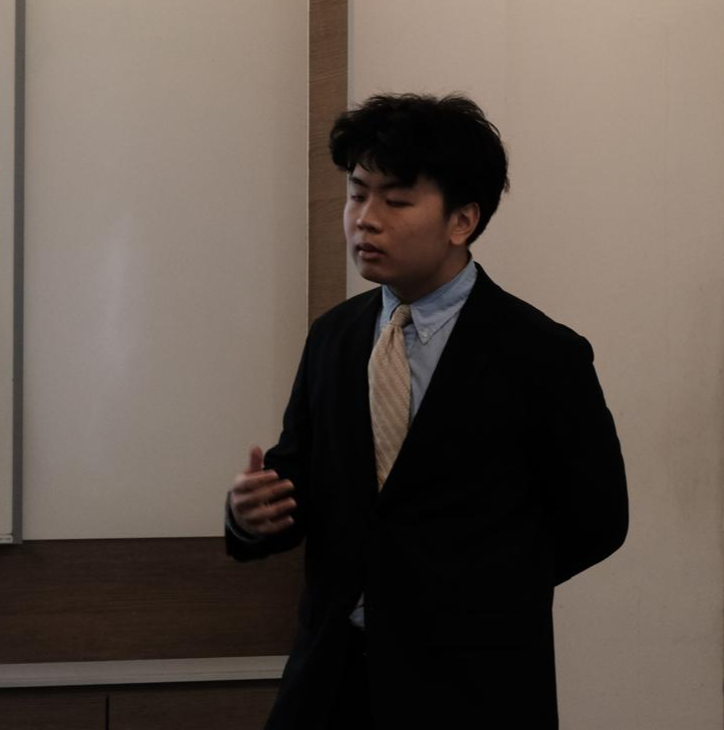

Photo: @nanyangphilosophy and @duckdeleuze666 on Instagram
Sean Francis Han is a continental philosopher, critical theorist and educator currently pursuing his PhD at the National University of Singapore (NUS). In this interview with staff writer Jayvier Chua, he muses upon Singapore, and reflects on our pragmatism, self-censorship, public discourse, and what Singapore may lose in its pursuit of a “picture perfect” society.
Jayvier Chua: Sean, perhaps we could begin by discussing the role of the researcher in society? Particularly Singaporean society.
Sean Francis Han: When you say researcher, they come in many shapes and forms. You have the researchers over at RSIS who are ostensibly perhaps doing more status quo-aligned work; you have researchers in STEM, in AI, some of whom are more corporate-aligned, and then you have people in the critical humanities and critical theory who are more critical of the status quo. The role of the researcher comes in many different forms.
Jayvier Chua: What about the humanities researcher?
Sean Francis Han: That’s also very broad– researchers, even in the humanities, come in many shapes and forms. It’s not an easy question to answer– perhaps one thing that ties most of the humanities together is the desire to keep that human element of society alive, so whether you’re a critical theorist or psychoanalyst or literary scholar or you study the medivals, you, broadly, do believe that there is something beautiful, worthwhile and intellectually stimulating in coming to grips with that human element that comprises existence.
Jayvier Chua: And Singaporeans, we know about OB (out-of-bounds) markers, in schools we are taught to circumvent them, feign apathy, run circles around them– I think recently, scholars like Teo Yeo Yenn and Walid Abdullah have expressed discomfort about this. What’s your experience with OB markers, be they explicit or self-imposed?
Sean Francis Han: My encounter with OB markers comes up in different aspects of my life. Once upon a time, when I was more involved in activism , a demonstration I was a part of got me in trouble, and that was my first experience of crossing a boundary. In recent years, as I’ve dug my heels more into academia, you see it there as well—there’s a lot more in the way of self-policing; there is a sense that there are certain things that you just know will not fly. Recently and quite famously, NUS has a checklist if you want to bring in an external speaker; you have to look at the content of their speech, and kinda self-assess how inflammatory it's going to be.
This is a country with OB markers– you run into them, negotiate them, navigate them, work your way around them. I think a lot of my life has been trying to get out of that habit of self-policing.
Jayvier Chua: We’re a strange case because it isn’t as if there is totalitarian censorship; a lot of academics negotiate with OB markers and push the boundaries of the Overton window. Somebody like you seems to exist at such a point where this is what you’re doing.
Sean Francis Han: I’ll throw in one thing– I don’t want to downplay the significance of censorship and OB markers, but I do also find that there is an apathy in this country– I run into that as much as censorship. For me, I find that the apathy is as much a challenge as the censorship. There’s a reason why we have that Singaporean shorthand, ‘can lor’ ‘it’s like that lor’.
Jayvier Chua: Where do you think that apathy comes from? Somebody close to me once said that getting a PHD doesn’t have the greatest ROI. Singapore seems to conceive of intelligence and its value only in relation to its capacity for monetary gain. Where do you think this ultra-pragmatic apathy comes from, and how do we overcome it?
Sean Francis Han: Wah. You could probably write one or two dissertations on that question– it's a mix of our unique geopolitical situation, colonisation and of course the legacy of historical affairs. I don’t think that Singaporeans are naturally apathetic people– you think about Barisan Socialis, the history of community outreach and civil society—we’re not an apathetic people. Our apathy is not natural, it was definitely well crafted and engineered, and likewise, can be reverse-engineered and undone.
Jayvier Chua: And do you see a way forward from this?
Sean Francis Han: I’ve sort of given up on asking ‘where do we go from here?’ and shifting the question to ‘what can I do from this point on?’. In our own different ways, with our own different skills, there are little things that we can do. I’m not good at many things but what I am good at is critical theory, critical structuralism– I can teach that pretty well, and I’m a decent orator. I'm good at simplifying things, and I quite love building communities around those interests– that’s what I can do.
I went to Athens recently for a conference, and one of the things I learned there wasn’t academic– I spoke to folks there involved in community organising, activism, politics, and I learnt that a good chunk of their day-to-day jobs was organising film screenings or reading groups or book clubs or even dinner, hangouts… stuff like that. The importance of that is that it builds community, it gives people a chance to discuss ideas, build collective interests and networks, such that when stuff goes down and there’s a need for mutual aid it’s easier to activate people. That’s revolutionary in its own way, but that’s just one thread– everyone has their own part to play, keeping the spark alive through doing little things in our own ways.
Jayvier Chua: Pivoting a little, when we talk about Singapore, many Singaporeans seem to imagine a scale with idealism on one extreme and practicality on the other, and they consequently think about trade-offs a lot; between what they want and what is feasible– we see this constantly on the news– if you tax the rich, there’ll be capital flight etc.– there’s this regurgitation of the trade-off rhetoric. Do you have thoughts on that? Do you think this dichotomy is legit?
Sean Francis Han: There are two things to be said on that. Firstly, I will cautiously agree that there are trade-offs and Singaporeans do have to start thinking about those trade-offs. The movements now in the ecocritical tradition of post-sustainability or degrowth are really trying to get people to consider if it would be alright to take a little less growth and wealth if it meant we don’t drag ourselves into extinction. I do think that’s something Singaporeans need to reckon with.
If you are genuinely worried about capital flight but at the same time you are complaining about rising costs of living, you have to ask yourselves if the trade-offs are trade-offs you’d be willing to make. A broader complaint is that Singapore has no soul and no arts scene– you have to ask yourself, then, are you okay with a society that is maybe not as “competitive” but perhaps a bit more holistic, liveable and community-forward. Those are some considerations Singaporeans have to think about.
On the other hand, I do want to question the logic of trade-offs– when we say trade-offs, trade-offs for whom? Capital flight– who does that really impact? Is it the cai png auntie? I don’t think so– I don’t think she cares if Apple doesn’t open another office here. I think that these are perhaps bogeymen– who are the people who are really affected by these trade-offs? The critical question to ask is who really loses out on that, if we are to take up a certain policy that leads to lower GDP or capital flight. I suspect these trade-offs are disproportionately the prerogative of a certain upper-class demographic, not Singapore’s working class.
Jayvier Chua: Looking at the status quo of social affairs in Singapore, do you see reason for hope, going forward? You’d be familiar with Hegel’s dialectical process of history– there’s a collective thesis, then an antithesis and then a synthesis, which then becomes the new thesis to be destroyed and improved via tension with a new antithesis so forth as we continually improve– do you see that dialectical flow in Singapore?
Sean Francis Han: I’m a Deleuzean, so I don’t believe that there's a geist or spirit owl bringing us towards absolute knowledge and paradise. Things are a bit more chaotic than that; nobody can know the future, and a country’s development is as much a product of its internal forces as the things that imbricate it externally. Look at Taiwan– how much of its existence has been constituted by a country outside of itself; Singapore is similar.
Secondly, even to talk of a country’s history or chart a narrative of progress is difficult, especially so for Singapore. We think about Singapore as a young country but really this place has been around since, if I’m not wrong, the 1200s; so 700, touching 800 years. You have one history laid upon it by the colonial British and another one by our leaders post-independence, and then other community histories laid out by independent historians– so what exactly is our history? What is the dialectical motor? With China, you can say there’s the dynasty of Qing Shi Huang and that set up the dialectic, but you need to ask, how much of that is constituted by local historians and how did their socio-political grounds affect the history? Then you have Mao’s China, then Deng Xiao Ping, now you have Xi Jin Ping– how do these people twist and bend that history? We say ‘China’ as if it's very clear but what exactly is China and its history; who are the people that write that history? Using one person’s historical perspective and drawing a dialectical line might be working with fictions; it doesn’t give us the whole picture.
I suppose my answer to your question then would be that there is no point and no need to hope or fear but only to look for new weapons. That’s from Deleuze’s Postscripts, but the point is that our future is in our hands, not Minerva’s owl’s.
Jayvier Chua: A quick one, should we evaluate a philosopher as a figure and not just a writer? People get turned off when they see contradictions in a philosopher’s life and their works– Sartre was famously saying that, ‘if you act for oneself you act for all humanity’ but then afterwards, we found out he may have been abusive. Should a philosopher’s life, especially one working with ethics, affect our evaluation of their work?
Sean Francis Han: It 100% should. I’ll give you my thesis: the way a person lived their life should impact how you read their work. But that does not mean we should impose moral purity onto philosophers, discard everything they ever wrote if something heinous comes up. The nuanced position is to take their lives into one’s reading of their works.
Jayvier Chua: Do you have any closing remarks for the readers of this interview?
Sean Francis Han: Maybe I’ll say one thing. I was looking at the Picture Perfect Project page and trying to think what it is you might ask me or what I might say that is relevant or interesting to the project.
I’m gonna sound like Žižek when I say this but, maybe I want to contend that in Singapore, we do live in a picture perfect society, but then to pose the question: do we want to live in a picture perfect society? We might all do well by reading Brave New World which is a very great example of a picture perfect society; now do you want the society where ostensibly everything is great, everybody’s constantly in a state of relative comfort, but there is no messiness, challenge, growth, life, spark, there’s nothing unexpected?
That’s the question we might want to ask ourselves in this country; how perfect is too perfect? And to what extent are we willing to risk a little of ourselves in order to bring a bit of life and the unexpected into this country?
More on Sean Francis Han
Picture Perfect Project, Article (X)




Comments