Professor Kenneth Paul Tan on Singapore's Changing Social Compact and National Narrative

Updated: Jul 25

Few countries have told a story about themselves as successfully as Singapore. The narrative is familiar: a vulnerable island with few natural resources overcomes adversity through competent governance, social discipline, economic pragmatism, and the promise that hard work will be rewarded. For decades, that story has shaped how Singapore is understood by its citizens, its leaders, and the world beyond it.
Its vocabulary is equally familiar: meritocracy, pragmatism, resilience, survival, success. Over time, these words have become part of Singapore’s political and moral vocabulary, shaping how the country explains itself, justifies its institutions, narrates its rapid development, and gives citizens a language for understanding their place within the nation.
But national stories do not endure simply because they once worked. They endure when they continue to make sense of the present. In recent years, Singapore’s public discourse has become more unsettled, as everyday experiences have begun to complicate the country’s familiar language of success, stability, and social mobility. While Singapore’s international image remains closely tied to efficiency, safety, prosperity, and order, many Singaporeans now describe a widening gap between the country’s polished national image and the lived realities beneath it.
Singapore’s success story is not inherently false or weak. A story built to explain one era may simply no longer be sufficient to account for the complexities of another.
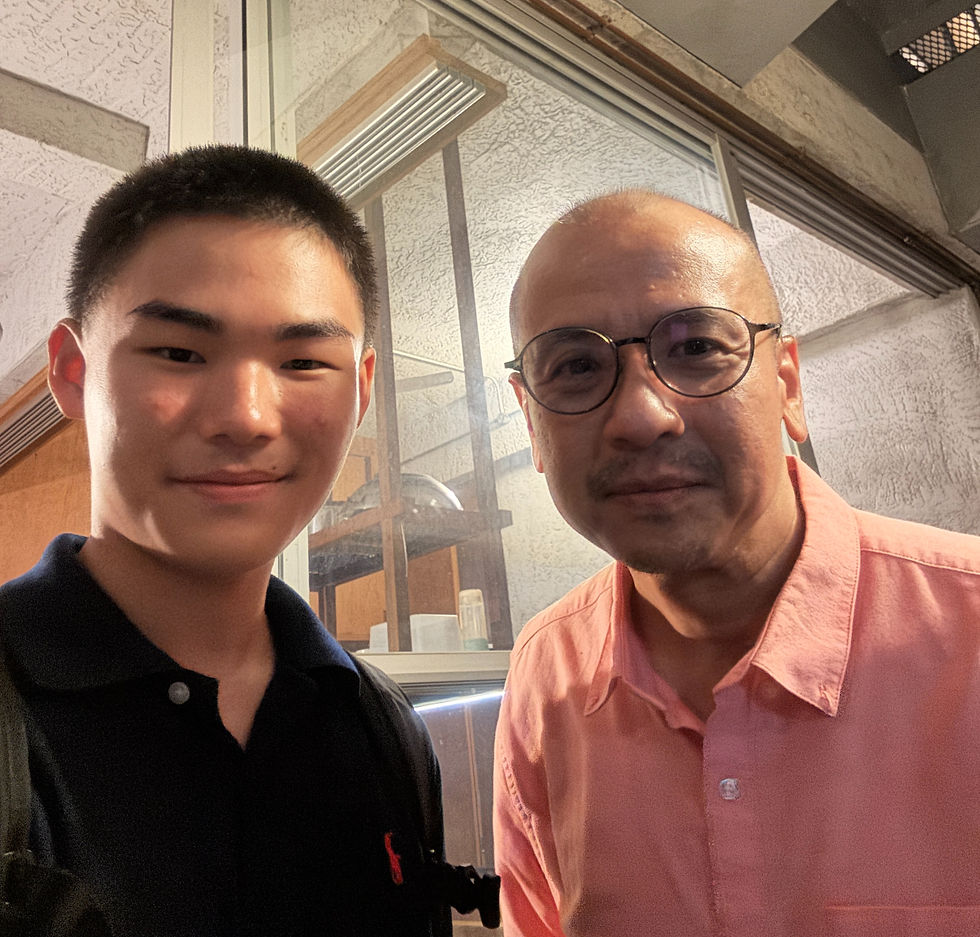
Much of Professor Kenneth Paul Tan’s work sits within this tension between national narrative and lived experience. Tan is Professor of Politics, Film, and Cultural Studies at Hong Kong Baptist University and one of Singapore’s leading scholars of public culture, governance, and national identity. His research interrogates the cultural politics of power, identity, memory, governance, film, public culture, and nation branding in postcolonial and globalising Asia.
In our conversation, one theme returned again and again: Singapore’s challenge today may be narrative as much as economic or political. The same ideas that once helped explain the country’s rise—meritocracy, pragmatism, competitiveness, survival, and global relevance—are now being asked to explain realities they were never fully designed to address. As Singapore has grown wealthier, more globalised, and more complex, the distance between national narrative and lived experience has become harder to ignore.
Tan does not reject these foundational ideas outright. His analysis begins from the recognition that they were once persuasive because they reflected genuine improvements in people’s lives. The “problem” began when the conditions that made those promises believable started to shift with time.
In his 2017 work on meritocracy, Tan argues that Singaporean meritocracy contains an inherent tension between its egalitarian and elitist strands. Meritocracy claims to reward talent and effort fairly, yet it can also obscure the unequal backgrounds from which people enter competition. When social advantages disappear beneath the language of fairness, meritocracy may end up treating unequal people as though they began from the same starting line (Tan, “Harnessing Talent” 21–22). Meritocracy, then, can enable mobility while also legitimizing inequality. That is what makes Singapore’s present moment so difficult to interpret. Many people still believe in meritocracy. Increasingly, they are less certain that meritocracy believes in them.
Singapore is often described as highly successful and tightly managed. What assumptions about success, fairness, and mobility does this narrative rely upon?
Throughout our conversation, Tan returned to the language through which Singapore understands itself. Success, vulnerability, meritocracy, and welfare operate as part of the story Singapore tells about what kind of society it is.
“Success is clearly one of the key words in Singapore that help people make sense of the meaning of Singapore,” he told me.
Yet success in Singapore has rarely stood alone. It has almost always been paired with vulnerability: and the impending belief that the country is small, fragile, resource-poor, and permanently exposed to danger. That pairing has shaped Singapore’s national imagination. The country is exceptional, while that same exceptionality is precarious. It has succeeded, but only because it remained disciplined. It is admired, but only because it refused complacency. The story works because it transforms vulnerability into a moral imperative: work harder, compete harder, trust the system, do not risk what has been built.
In his chapter on pragmatism and the neoliberal state, Tan describes how Singapore’s governing narrative has long intertwined survival and success. The state’s legitimacy has rested partly on its ability to deliver economic growth and material well-being under conditions of permanent vulnerability (Tan, “Pragmatism” 41). Within this framework, national success is rendered fragile, conditional, and dependent on continued discipline even as it is celebrated.
Meritocracy became one of the central promises inside that story. At its most persuasive, meritocracy promised both reward and uplift. Rather than only celebrating winners, it suggested that ordinary citizens could rise through effort, education, and discipline.
That promise becomes harder to sustain when the ladder itself appears more difficult to climb. Tan describes meritocracy as a system that seeks “optimal inequality”: enough inequality to motivate people and allocate talent, but not so much that mobility becomes impossible (Tan, “Harnessing Talent” 22). Once inequality becomes too visible, the same system that once inspired ambition can begin to produce resentment, exhaustion, and disbelief.
Singapore may now be approaching that delicate threshold—or people are becoming more aware of this existent threshold. The language of meritocracy still carries moral force, but it exists in a society where tuition, family wealth, elite networks, housing assets, and inherited advantages shape life chances in ways that are increasingly difficult to overlook.
When did you begin to see cracks emerge in that narrative?
Although Singapore’s success story remained persuasive for decades, Tan argues that signs of tension appeared earlier than many assume.
“Yeah, about the ’90s actually,” he said. “Let’s say the mid-’80s.”
He pointed to economic restructuring, globalization, and the emergence of a new generation of leaders influenced by more market-oriented forms of thinking. The entrance into the 1980s and 1990s did not dismantle the Singapore story. If anything, it intensified it. Singapore became more connected, more competitive, more ambitious, and more conscious of its image from a global standpoint. But the parameters of success were also evolving. Marking a shift from no longer only building itself after independence; to positioning itself as a global city.
In Singapore: Identity, Brand, Power, Tan argues that contemporary Singapore has a dual identity: it is both a small postcolonial multicultural nation-state and a cosmopolitan global city. These two identities do not always sit comfortably together. The state must navigate the contradictions between internal nation-building and outward-facing city branding (Tan, Singapore: Identity, Brand, Power 1–2). Singapore must remain emotionally meaningful to citizens while also appearing legible and attractive to tourists, investors, foreign talent, and global capital.
That dual identity helps explain why the Singapore story can feel at once successful and strained. As a nation-state, Singapore needs belonging, memory, citizenship, and emotional attachment. As a global city, it needs efficiency, visibility, competitiveness, and marketable appeal. Thus making it feel as the strain begins when the latter starts to crowd out the former.
How has Singapore’s transformation into a global city changed the relationship between image and lived experience?
For Tan, one of the most consequential developments of the past three decades has been Singapore’s evolution into a global city. In that shift, image itself became a strategic asset. As competition for investment, tourism, and talent intensified, Singapore invested more deliberately in cultivating a particular image of itself.
In his recent research publication “From Spectacle to Reflexivity,” Tan argues that Singapore’s nation branding has produced “symbolic coherence alongside emotional fragility” (Tan, “From Spectacle to Reflexivity” 1). The phrase captures the paradox at the center of Singapore’s global image. The brand is coherent because it is clean, efficient, safe, modern, and meticulously managed. It is emotionally fragile because many citizens experience Singapore not only as a world-class city, but also as an expensive, competitive, stressful, and emotionally demanding place to live; thus, the tension becoming most visible.
Tan’s 2025 publication argues that conventional nation branding often privileges polished imagery, admiration, and strategic messaging over complexity and internal resonance. Singapore’s campaigns may successfully project vibrancy, creativity, order, and resilience to outside audiences, but local publics are more attuned to what those campaigns leave out: the emotional cost of hyper-competitiveness, narrowing life pathways, and the divide between a polished Singapore admired by outsiders and a more stressful, unaffordable, emotionally muted one experienced by residents (Tan, “From Spectacle to Reflexivity” 2–3).
That is one of the central contradictions of the “picture perfect” city. Singapore’s global image is not accidental. It is constructed through airports, skylines, cleanliness, safety, efficiency, world-class universities, tourist campaigns, and governance rankings. But everyday life, as one would experience, carries other textures: academic pressure, rising costs, crowded commutes, emotional fatigue, shrinking pathways, and the quiet fear of falling behind. This contradiction highlights how branding works externally when it appears seamless. While it frays internally when citizens feel that their lives do not align with the image being projected.
Singapore’s image is real but incomplete. It becomes problematic when made to stand in for the entirety of the national experience. A country cannot only be understood from the airport, the skyline, the investment brochure, or the tourism campaign. It also has to be understood through the people who inhabit the image.
Tan’s 2025 work proposes “reflexive nation branding,” where national identity is an evolving public conversation shaped by memory, critique, emotional resonance, and foresight (Tan, “From Spectacle to Reflexivity” 1). The question, then, is whether Singapore’s national story should remain a polished image managed from above, or whether it can become a space where citizens speak candidly about contradiction, disappointment, attachment, and hope.
What does the idea of “Hotel Singapore” reveal about belonging and citizenship?
One of the most striking concepts Tan discussed was “Hotel Singapore,” a scenario-planning exercise from the 1990s that imagined a future in which Singapore had become prosperous but emotionally hollow.
The anxiety behind “Hotel Singapore” was the erosion of attachment. The scenario imagined a place that remained globally connected and commercially successful, but where people related to Singapore in transactional terms. They came, worked, consumed, moved through, and left. The city functioned, while belonging weakened; resembling a temporary stay hotel.
In his 2025 publication, Tan returns to “Hotel Singapore” as one of Singapore’s early national scenario-planning exercises. He explains that the scenario imagined a hyper-globalised society weakened by transactionalism and the hollowing out of civic identity (Tan, “From Spectacle to Reflexivity” 8). Its value was pedagogical, it compelled policymakers to ask what could go wrong beneath apparent success.
That is why “Hotel Singapore” still resonates. It names a fear that remains recognizable today: that a country can become globally admired yet emotionally thin and silent within.
A hotel can be clean, safe, efficient, and luxurious. But people do not belong to a hotel, of course; They use it and may admire it, but they do not owe it loyalty beyond convenience.
That is the risk of a purely transactional national compact. If citizenship is imagined mainly through performance—study hard, work hard, obey rules, contribute economically, receive stability—then the relationship between citizen and country becomes conditional. It may produce compliance while failing to cultivate genuine attachment. In the process, it may produce productivity while losing out on belonging.
Tan’s work suggests that a more robust national story cannot be built only through better branding or better delivery. It needs a deeper civic imagination: one that allows citizens to feel not merely like users of a successful system, but co-authors of a shared society.
Has Singapore become too dependent on economic logic when thinking about society?
A recurring theme throughout our discussion was Tan’s concern that economic reasoning has increasingly shaped how Singapore understands social life.
“The problem is that we’ve become very good at thinking economically about everything,” he said.
Tan acknowledged the role economic success has played in Singapore’s development. But not everything valuable can be measured through productivity, efficiency, or growth.
“There are many things that matter in life that cannot be reduced to economic value.”
This connects directly to his work on pragmatism. In Singapore, pragmatism is often presented as a refusal of ideology: a practical commitment to doing what works. Tan argues that this claim is itself ideological. In his 2017 chapter on pragmatism and the neoliberal state, he describes Singapore’s pragmatism as a complex ideological formation that presents itself as “anti-ideology,” even as it often aligns with market logic and neoliberal globalization (Tan, “Pragmatism” 42).
Pragmatism has clearly had value. Singapore’s pragmatic style has enabled flexibility, long-term planning, institutional competence, and policy adaptation. But it can also circumscribe the public imagination when “what works” is defined mainly through economic growth, efficiency, competitiveness, and measurable outcomes.
Tan identifies several dimensions of Singaporean pragmatism: its suspicion of idealism and utopian thinking, its adaptive and mimicking nature, its focus on technical means, and its tendency to disregard intangible or unquantifiable values (Tan, “Pragmatism” 42). These features help explain Singapore’s effectiveness, but also its blind spots. A state that excels at solving technical problems may struggle with questions that are moral, emotional, cultural, or existential.
In our conversation, Tan framed the problem culturally. If the only available language is economic, society loses the ability to ask non-economic questions.
“If the only language we have is economics,” he said, “then we lose the ability to talk about what kind of society we actually want to become.”
That may be one of Singapore’s deepest challenges. The country has become highly skilled at asking how to remain competitive. It is less comfortable asking what forms of life are worth protecting even when they are inefficient, unprofitable, slow, strange, or difficult to measure.
Who gets to define merit?
Another important part of Tan’s work is his critique of Singapore’s “macho-meritocratic” elite. The phrase refers to more than powerful individuals. It describes a style of governance that links legitimacy to elite achievement, technocratic competence, and the belief that the best-qualified people should be trusted to govern.
In his 2017 chapter “Harnessing Talent for a Macho-Meritocratic Elite,” Tan argues that Singapore’s leadership system has often defined merit through academic achievement, professional credentials, administrative ability, and elite recruitment. This allows the state to present itself as rational and competent, but it also raises a deeper question: who gets to define what counts as merit?
Tan warns that limiting national decision-making to a small technocratic elite can create groupthink and constrain the range of perspectives needed to solve complex problems. A broader cross-section of ordinary Singaporeans, he suggests, may be necessary to understand increasingly globalized and uncertain national problems (Tan, “Harnessing Talent” 30). Democracy and participation, in this reading, are practical sources of intelligence as well as moral ideals.
That point matters because Singapore’s most difficult questions cannot be solved only by technical expertise. Housing affordability, mental health, belonging, inequality, migrant worker dignity, artistic freedom, and intergenerational anxiety are not just administrative problems. These lived problems require efficient policy design that can be supplemented also by emotional listening, public trust, and a willingness to let people articulate their own realities.
A meritocracy that only identifies top performers may miss other forms of knowledge: the knowledge of families under pressure, students under stress, workers without security, artists without space, and citizens who feel attached to Singapore but excluded from its official imagination.
If Singapore’s old story is becoming less persuasive, what comes next?
Although much of our discussion focused on critique, Tan ultimately returned to imagination. His recent work on reflexive nation branding is especially useful here. Tan argues that nation branding must shift from perfecting image toward cultivating imagination, narrative alignment, and shared ownership (Tan, “From Spectacle to Reflexivity” 1). The future of Singapore’s national story cannot simply be another campaign, another slogan, or another more emotionally polished version of the same success narrative. Tan believes that it has to involve listening.
Tan’s proposal is not to abandon national branding, but to rethink it as civic infrastructure. Instead of treating citizens as passive recipients of an official image, reflexive branding would treat them as co-authors of national meaning. It would create spaces where memory, critique, anxiety, contradiction, and aspiration can be publicly negotiated. Bringing forward a change where disagreement, then, is not necessarily a threat to national identity; rather, it may be one of the ways national identity stays alive and more inclusive.
In his 2025 publication, Tan argues that symbolic credibility and emotional legitimacy depend not on admiration alone, but on a nation’s capacity to listen to itself, confront its contradictions, and reimagine its futures (Tan, “From Spectacle to Reflexivity” 1). Highlighting a stuanch shift from branding as reputation management to branding as civic practice.
Singapore, in this view, need more room for authentic stories. Near the end of our conversation, Tan condensed the point into a phrase that remained with me.
“Singapore just needs to be weirder.”
By “weirder,” Tan was not calling for disorder. He was calling for diversity: more ways of living, thinking, creating, and belonging.
“What I mean is diverse,” he said. “The quickest way to decay is to be robotic, is to be one-dimensional, to be one thing instead of many things.”
This may be the most important challenge to Singapore’s picture perfect story. Perfection can be impressive, but it can also be brittle. It leaves little room for contradiction, failure, eccentricity, grief, anger, play, and experimentation.
Tan’s critique is not simply a outright rejection of Singapore’s success. He is instead posting a voice against allowing success to become one-dimensional. The question is not whether Singapore should continue to be competent, safe, efficient, and globally respected. The question is whether it can also become emotionally honest, culturally generous, and imaginative enough to encompass the experiences its official story has often left out.
The next Singapore story may not be as neat as the last one. It may be more contested, more plural, more uncomfortable, and more strange, And that may be exactly why it is needed.
References
Tan, Kenneth Paul. “From Spectacle to Reflexivity: Rethinking Nation Branding through Public Pedagogy and Foresight in Singapore.” Place Branding and Public Diplomacy, vol. 21, no. 4, 2025, pp. 401–411. https://doi.org/10.1057/s41254-025-00403-7.
Tan, Kenneth Paul. “Harnessing Talent for a Macho-Meritocratic Elite.” Governing Global-City Singapore: Legacies and Futures after Lee Kuan Yew, Routledge, 2017, pp. 20–40. https://doi.org/10.4324/9781315622910.
Tan, Kenneth Paul. “Pragmatism and the Neoliberal State.” Governing Global-City Singapore: Legacies and Futures after Lee Kuan Yew, Routledge, 2017, pp. 41–64. https://doi.org/10.4324/9781315622910.
Tan, Kenneth Paul. Singapore: Identity, Brand, Power. Cambridge University Press, 2018. https://doi.org/10.1017/9781108561273.
Picture Perfect Project, Article (VII)





Comments