The Poet's Fight for Free Thought in Singapore: Cyril Wong in Conversation
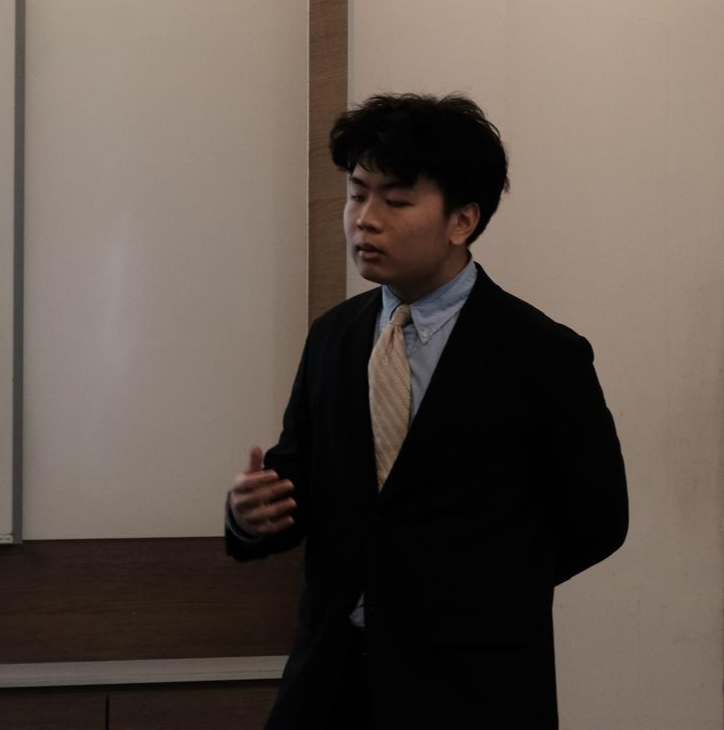

Cyril Wong is perhaps Singapore’s most prominent poet– yet despite the fame, he too has had to reckon with the powers that be. He holds a PhD in English Literature from the National University of Singapore (NUS), has been awarded the Singapore Literature Prize twice (one of only two English-language poets ever to do so), and has cemented his role as a constant provider of literary luminosity over the course of his multi-decade-long career.
Speaking with Staff Writer Jayvier Chua, Wong reflects upon censorship, finding acceptance in conservative Singapore, spiritual-philosophical ideas of his, thinking critically amidst hegemony of narrative and more.
We begin on a somewhat philosophical note.
Jayvier Chua: In an interview of yours, I read that the reason you write is to chip away at Singaporean conservatism. But a lot your work is very lyrical, atmospheric and spiritual in a way most Singaporeans wouldn’t get. Do you see a paradox here? And why did you choose poetry over other mediums of advocacy like community organising?
Cyril Wong: Because those roles are already filled. There are already people out there putting their necks on the chopping board, taking a risk, protesting, making statements about why something is wrong, speaking truth to power, even doing jail time… I don’t have the personality for it. It isn’t something that interests me– that obvious, literal activism. I prefer something in the background with more nuance. It speaks also to my sense of being an artist first, including as a vocalist. I don’t believe that life is just about one thing.
I want to speak to the Singaporean that is like me. I, for one, am not moved by obvious activism, virtue-signalling online or someone on the internet telling me how to think– I’ve always said that this mirrors America’s partisan politics. No one really wins, it’s just a pendulum: one day you have Barack Obama, one day you have Trump… It’ll swing back again…
Wong’s words are especially striking in the recent aftermath of the American midterm elections, when Donald Trump faced the strongest rebuke of his career from American voters.
They are also uncannily pertinent as Singapore basks in the aftermath of GE2020 and GE2025, two political shocks for the de facto political hegemony, in different ways.
How long do you have to rejoice? It doesn’t make any sense to me– I’ve lived long enough to know that the pendulum never stops. For me, it isn't interesting to be part of that Hegelian dialectic. I’m more interested in speaking to people like myself, who are more moved by nuanced discourse, artistic expression and ways of feeling less alone in the face of the ineffable…
Art is spiritual, the spiritual is personal, and the personal is political. Poetry is the one way that covers all of these in one breath, one page, one line, one enjambment, one poem… Sometimes poems don’t even have words yet the poet can convey what they need. To me, that speaks more deeply and resonantly to something beyond language which connects us all.
I then ask Wong if he thinks language is inherently flawed at truth-telling.
Cyril Wong: It’s also because, to speak in more childish terms, I’ve been burnt too many times. Through language, I’ve been lied to many times. People are always telling me that things are wrong, that tautology shoved down my throat by religion, the government, school teachers… No one ever questions it in a place like Singapore.
It is only in poetry and art that there is a space to go, “hang on… let’s not have a fixed point of view here… let’s open ourselves up to different kinds of possibilities”… That’s the kind of intangible community I’m interested in exploring, which is inherently political because it stands against hyper-literal language.
Catching wind of his Hegelian tendencies, I mention paradox, which he writes so much about. I quote from his short poem ‘To Meet Your Sky’ as evidence of this, ‘My body is at once nothing and everything you can possibly take’. I ask if he embodies paradox as a confessional poet that writes on the political. ‘Do you embody paradox as a political-confessional poet?’
Cyril Wong: I love that. Yes! Though a part of me bristles when I hear “political”. The term is always tied to the rigid and the black-and-white. But I understand what you mean– I am “political” in that I sway peoples’ minds and stand in contradiction to oppression. At the same time, I am contradictory in that though I contradict oppressive discourse, I also want to reach out and say “we are not so different”; there are things between me and whatever enemy I imagine myself to have. That is why I love paradox– it’s an invitation.

The conversation then turns to his book-length poem, ‘The Dictator’s Eyebrow’. It has, as its subject matter, an unnamed dictator who all Singaporean readers immediately recognise as a certain foundational statesman. Cyril laughs: I need not mention his name for him (and readers of this interview) to know who I am referring to.
Jayvier Chua: I have been told that in the years when you were growing up, free speech was even more repressed than it is today; that this statesman was like a God to people; nobody dared to question him.
Did that environment leave an impact on you? How did you transcend authoritarian aftershock, and come to publish this book?
Cyril Wong: I’m almost 50… I never really moved past it, it’s a part of who I am… I went through things in the 80s and 90s. I still see repackaged glimmers of it now.
People tend to neglect the new force of conservatism disguised as liberalism, the ‘I versus You’ dichotomy that still goes on. These trends are always about exclusion from dialogue. In the past, being gay, queer or outspoken about politics was wrong and you simply couldn’t do it. Today, there seems to be the inclusion of some dissension and disagreement, yet the OB markers (out-of-bounds markers) are becoming more invisible: instead of censoring you outright, they make sure a book of yours doesn’t appear at the library, or you’ll suddenly not be given a job you applied for and they won’t tell you why… things like that.
Things might seem different now, but really, the fist that hits you is just wearing more fabric; the glove is lusher and more comfortable but you’re still being struck. It’s still the psychological abuse of knocking people down, making sure they feel defeated all the time. It’s just that today, you don’t know why you feel defeated.
I don’t wanna circle back to the past, but sometimes, I feel like in the past, things were clearer: you knew where you stood in terms of dissenting from the norm.
I ask him if his battle with censorship is the reason he chose not to enter academia. Though formally apolitical, that dissident academics in Singapore’s public universities do not truly enjoy the freedom they formally possess is an open secret: in a previous article with the Picture Perfect Project, NUS-affiliated philosopher Sean Francis Han speaks on this. Superstar NTU-affiliated sociologist Teo Yeo Yenn writes on this de facto academic censorship as well in an essay of hers.
Cyril Wong: That’s a clear part of it. I’ll never be hired by the local universities. I can’t remember his name, I think it was a local playwright, who talked about how there are Singaporeans who are on an invisible black-list. We don’t know why we’re there, but we’re there…
Based on his usage of the pronoun ‘we’, it seems that Wong, too, is on this blacklist.
Whenever we apply for a job lasting more than three months; you can interview for it, or even verbally be congratulated for getting the job, but a week later, they’ll receive some weird phone call from Human Resources (HR) that tells them “oh, this person ah? Cannot lah, you cannot hire this person”. There are real reasons why I can’t be an academic in Singapore.
The second reason is more ordinary: I really hate recalling research, quoting my sources, noting my bibliography, doing the Chicago-style shit… I just hate all that. It feels so frivolous to me.
Wong then tells me that he has ‘intellectual ADHD’ and cannot fixate on colonialism (or any other topic) for three years. He says that academia pigeonholes researchers into rigid categories, something he simply cannot take.
‘So what has your intellectual ADHD been fixated on lately?’
Cyril Wong: My spiritual side. I’m interested in talking about how relationships and love are tied to mystical enlightenment and revelations about who I am in the world, how love connects me to a larger reality.
It’s funny that you’re asking me this question because my partner and I went to watch the movie adaptation of Ramayana for Deepavali, so that’s my fixation right now. Watching movies like that made me think about my writing practice and consider connecting with epic stories that have already been told and perhaps retell them in new ways through my confessional voice. I might or might not do it.

Referring to The Straits Times, I point out that Wong was one of Singapore’s first openly gay poets. What’s more, sexuality or the gay experience is central to Wong’s poems. He is turning fifty next year, and so he presumably spent his youth in a Singapore even more conservative than the one I know.
I ask him about the literary community’s reception to him as he was beginning his career, traversing a landscape undeniably different from today’s.
Cyril Wong: There are two parts to this: the writing community at the time (people like Edwin Thumboo, Toh Hsien Min, Paul Tan etc.) and then the publishing side of things (the grants, the National Arts Council, the Writers Festival… the more bureaucratic side of the writing scene). In order to be a writer here, you have to be connected to both.
On the writing community side of things, I was very pleasantly surprised. I was very much welcomed; everyone was very warm and sweet to me, inviting me to things, putting up with me talking about my body all the time.
Even Edwin Thumboo helped to edit my poems and wrote an introduction for one of my books. All he ever did was, even though I knew he was a very staunch Christian conservative, was point to a word here, a tense here, change a word from plural to singular, telling me to change a part that was a little cliched … this taught me not to be so prejudiced against people who I thought were conservative and small-minded but who really weren’t. They were very open to the possibility of having my queer voice in the scene.
The other side of things was the real challenge…
In the beginning, publishers did not want anything to do with me. I literally had someone tell me that I couldn’t air dirty laundry in public, that poems in Singapore should not be about these things, it should be about society and social issues, and I was like…you’ve never read Sylvia Plath? What’s going on? It’s so bizarre for someone to say that they can’t publish you because your poems are too personal– then what poems are you looking for? Oh, I see, you want Merlion poems, void deck poems, poems about race… very externalised kinds of poems. I had to deal with all that.
The invisible OB markers came when I published my first book after a lot of difficulty finding a publisher who would take a chance on me– I would be invited to things and then dis-invited at the very last minute. I had to take it on, withstand this little storm and see what happens– I thought, if this means the end of my career, that’s fine, I’ll do something else; I'm a musician, I'm very adaptable. But then things started to slowly change, people started to invite me to more things– I remember there was a time when the Singapore Writers Festival didn’t invite me for five years, because they just didn’t know what I would say in public.
At this point, I let out a visible "HUH?" It feels ludicrous to imagine this: the literary scene I know is one where Cyril Wong is, to quote Daryl Qilin Yam, everyone's "fairy godfather."
After about two or three years, the National Library stopped inviting me to give talks and so on because they realised that I might offend the public.
Of course, they’ll never give you an email telling you that you can’t do this because you will offend the public– they’ll just not invite you anymore and you just have to wonder why. I have a new book out, why can’t I do the usual rounds of readings and workshops; why am I not allowed to be a part of the scene in that way?
I ask how the next generation of writers might overcome the OB markers Wong had to wrestle with.
Cyril Wong: Patience and time. Forbearance, quiet fortitude. My biggest challenge was having to constantly remind myself not to become bitter or overwhelmed by anger. I know a lot of queer activists around me who got eaten up by anger, some of them were totally consumed by it: they left the country, they unalived themselves… That kind of negativity can, rightly or wrongly, I’m not one to judge, be too much for a person to handle.
I had to keep telling myself: alright, this has happened, I can be offended for maybe five or six seconds, and then I’ll move on, I’ll do something else; I’ll sing a song, I’ll go on a date with my partner, I’ll have a nice meal, I’ll come back again and reassess. What do I do now? Do I write another poem? Do I create another manuscript? How do I find the emotion to write another manuscript when everything seems to be against me? I had to learn how to deal with all these existential questions– the main thing connecting them, for me subjectively: don’t be bitter, don’t be embittered.
Wong's refusal to fall prey to hatred, his persistence of compassion, reminds me of other public figures in Singapore's less-than-free marketplace of ideas who have also had to bear the weight of institutional rejection.
Then again, is Wong institutionally rejected? He continues to be an instructor for the Ministry of Education (MOE)'s Creative Arts Programme; his work is taught in schools (a poem of his was even used for the 'A' Level examinations; state media has praised him; his poetry has been featured on MRT trains and stations (alongside other 'troublemaking' poets like Alfian Sa'at and Ng Yi Sheng). I ask him how this is possible.

Cyril Wong: Because people couldn’t ignore me. It became a glaring gap: you’re doing this programme but why isn’t there a Cyril Wong here? Once the public starts to ask these questions, what is not said becomes very obvious. The pressure to include me in things just became too great over time.
I’m painting a very black-and-white picture lah, but at the same time, things change; the people in charge of institutions are getting younger, they’re not the same as those we had to put up with in the past. They have no issues trying to fight for me to be a part of this or that. But the main OB marker I still find myself having is this: they’ll never hire me to head a programme for at least one semester. I can do everything else but be a resident writer or teacher for more than three months. I’m guessing at this, but perhaps after three months, they find it too long—Cyril’s presence cannot be here for too long.
That a poet of Cyril Wong's caliber should be deemed unsuitable for prolonged employment seems egregious, almost laughable, to me, not to mention tragic.
I mention PJ Thum, and ask if doing what Dr. Thum did might be a way to challenge OB markers: making the glaring wound of omission blatant, making one's non-inclusion a source of discomfort for those in power. Wong does not know. He says that the moment he thinks of a solution, the OB markers change again. He says that he feels as if he is constantly reeling, metaphorically:
Every time good things happen to me, I’m like oh, that’s nice, I wasn’t expecting that! So I ride on that wave for a while, but I’m always waiting to be disappointed. Which is a very sad place to be– when the disappointment comes, I’m like there it is, I see it now; I knew this was too good to last.
I am shocked at the open tragedy.
That has been my existence. It sounds bitter, but I’m trying to say this in a way that’s jesty and ironic, because that’s the way it is here.
The interview is coming to a close, and I ask Wong for closing remarks. He tells me, hoping that his remark is not too negative or cynical, that for at least the next fifty years, Singapore will remain largely conservative. Being close to fifty, he says, he will not live to see the day when Singapore becomes more balanced in the liberal vs. conservative dialogue that occurs within its shores.
I think we’re just gonna be a very tight-knit, conservative, rigid little island.
Perhaps he is right.
Picture Perfect Project, Article (XIII)


Comments