The Death Penalty We Defend: Kirsten Han on Singapore’s War on Drugs and the Meaning of Justice
- Justin Park

- Feb 14
- 9 min read
Updated: 6 days ago

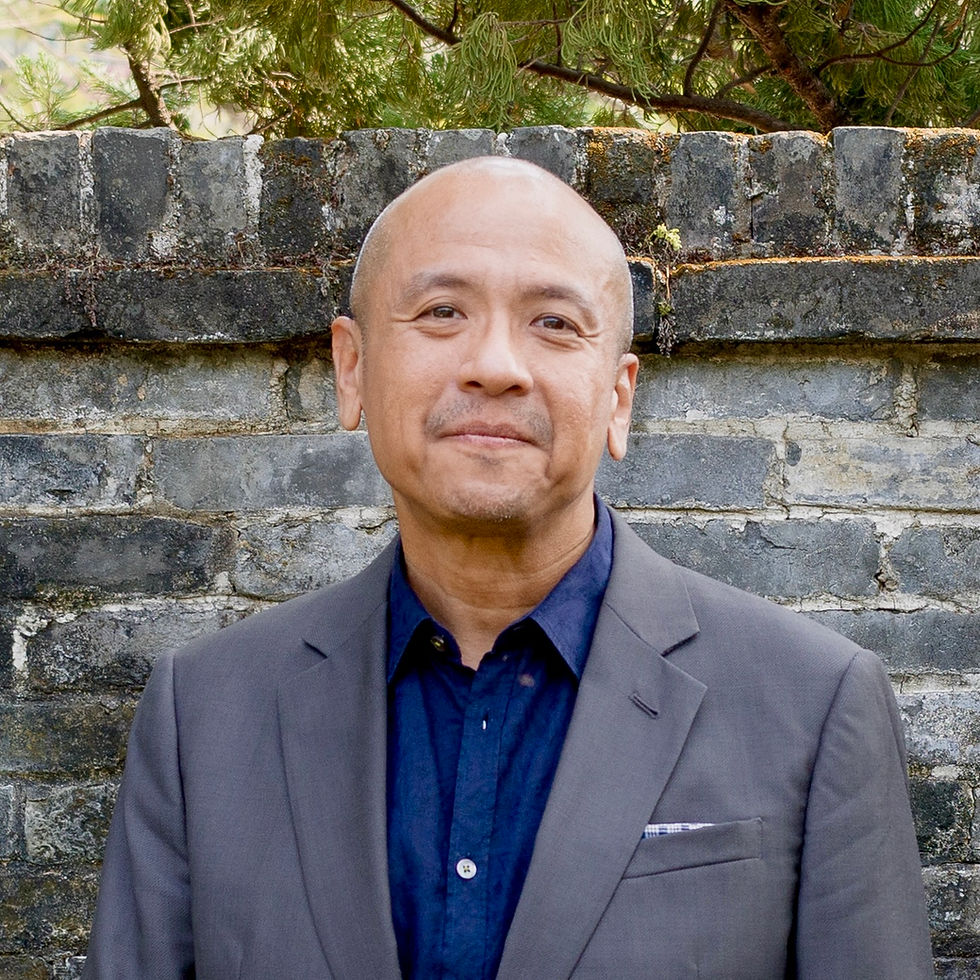
Activist Kirsten Han
Photo: Mediacorp
"if you still come in with a few kilos of them,
which will destroy hundreds, thousands of families,
one death is too kind"
Lee Kuan Yew spoke these words firmly to BBC HARDtalk host Tim Sebastian when pressed on Singapore’s use of capital punishment for drug-related offences. The exchange aired in 1998. Nearly three decades later, the statement remains ever so relevant. In 2025 alone, Singapore carried out 17 executions—the highest annual total since 2003, with the majority being for drug-related offences. The official narrative presented by the state through policy statements and mainstream public discourse frames capital punishment not as excess, but as necessity: a hard deterrent designed to protect the island state from the devastating societal effects of the drug trade and drug abuse. Legally, this framework rests primarily on the Misuse of Drugs Act (1973), under which the death penalty remains mandatory when drug quantities exceed certain thresholds, with only narrow exceptions introduced in 2012.
As a result of such policy and state framing, the use of capital punishment and the death penalty becomes part of a wider national security posture, encompassing an approach that treats drugs (both use and import/export) not simply as a criminal issue, but as an existential threat requiring an uncompromising response from the judicial system.
Yet official narratives for the need for capital punishment in Singapore are not uncontested. Civil society groups, activists, and a small number of political opposition voices have consistently challenged both its moral and practical foundations. Organisations such as the Transformative Justice Collective argue that capital punishment is an irreversible act of “state violence” that does little to address the structural roots of drug-related crime.
Furthermore, critics point to the profiles of those executed: often low-level couriers, foreign nationals, ethnic minorities, or individuals acting under economic desperation. They raise concerns about the morality of the death penalty, mandatory sentencing provisions that limit judicial discretion, as well as broader issues surrounding transparency, clemency processes, and access to legal resources.
It is within this contested terrain that journalist and human rights advocate Kirsten Han situates her work and advocacy as a conspicuous beacon.
Kirsten Han is a Singaporean writer, journalist, and human rights advocate. She is the Editor-in-Chief of Mekong Review and the author of The Singapore I Recognise. Through her newsletter We, The Citizens and her work with the Transformative Justice Collective, she has become one of the most prominent voices interrogating Singapore’s war on drugs and the continued use of capital punishment. Her bylines have appeared in The New York Times, The Washington Post, Foreign Policy, and The Guardian, among others. She has received multiple awards for her advocacy and journalism, including Advocate of the Year (2016), a Human Rights Press Award (2019), and an Honourable Mention for the World Justice Project’s Anthony Lewis Prize for Exceptional Rule of Law Journalism.
What follows is my conversation with Kirsten on how Singapore continues to defend the death penalty, and how the language of war, deterrence, and order narrows our moral imagination about justice in both political and public discourse.
Q: Singapore frequently justifies the death penalty on deterrence grounds (stopping "on the fence" traffickers). How convincing do you find that argument, and what assumptions about fear, behaviour, and human worth does it rely on?
A: There is no clear, conclusive evidence that the death penalty deters drug use or the drug trade. That’s just a fact.
How would you even manage to really measure something like that, when there are so many variables involved that affect drug use and the drug trade in any country? Variables include: socioeconomic circumstances, global drug supply flows (that affect what’s available where), shifting trends and preferences for different substances in different places, political or geopolitical events that might impact supply and demand (for example, we know that war and conflict in a place like Myanmar propels the drug trade as the junta and various armed organisations rely on drug manufacturing and sale to finance their operations)… how does one even begin to isolate and measure and compare to be able to say with any certainty that the death penalty is the deciding factor?
That said, the deterrence argument sounds convincing because it’s a cost-benefit analysis that makes sense to many of us on a surface level. If the cost is very high—as high as your life—then surely no one would want to take that risk? But we’re usually thinking about this from a place of privilege; we’re thinking that we wouldn’t make that choice. The situation and risk assessment could be very different for people with very different circumstances, and this isn’t even taking into account that cases in which people were tricked, manipulated, or exploited into participation in the illegal drug trade.
Q: Public discussion of capital punishment tends to stay at the level of legality and policy ("Justice Is Blind"). What gets lost when conversations remain there, rather than engaging with moral or social questions?
A: While I agree that public discourse on the death penalty often has to do with legality and policy, I don’t think it revolves around the notice that justice is blind. My observation is that it centres around punishment and vengeance. Because we think drugs are bad and dangerous, we see those involved in the drug trade as bad and dangerous, and we want them to pay the price. To circle back to the first question, this is what the “war” framing encourages—we are told that this group of people are the enemy, so we want to see them beaten down, we want to see them suffer for threatening us. It’s not about whether justice is blind; it’s about hurting the people we believe (because we have been told to believe) deserve to be punished.
What’s lost is the recognition that law often does not map cleanly on to morality. It doesn’t even map on to justice, really. Whether something is legal or illegal is often a very poor reflection of whether it is moral or immoral, or how much real-world harm is actually caused. For example: if you’re caught with 500g of cannabis, you could be hanged under the mandatory death penalty regime, even though there’s no identifiable direct victim (and in fact, there won’t be any ‘victim’ at all, because the cannabis has already been intercepted and confiscated). But if you drink and drive and actually kill someone, the penalty is not death. And if you’re an employer who withholds your workers’ salaries, it’s not even a crime at all, even though this is something that causes direct harm to the workers and the people who depend on their income.
In Singapore, we are too quick to equate justice with punishment. We see a perceived problem or harm, and our first instinct is that we should come up with some sort of punishment—or increase the existing punishment—so that there can be “deterrence” and perpetrators are made to pay the price. We very rarely slow down and engage in deeper analysis, reflecting on social, economic, and political conditions that might contribute to such behaviours or situations, and thinking about how we can transform these conditions so that people can make different choices—or better yet, not be put into desperate situations where they have to make choices that might bring them into conflict with the law.
Q: Whose suffering is made visible in these debates, and whose suffering is largely absent? How do class, stigma, and social background shape who is seen as deserving of empathy?
A: When it comes to the war on drugs, the government often highlights people who have suffered because of drug use, whether themselves or someone in their family. And I think those stories and experiences should be known, but the way that the government tells these stories don’t actually help us to understand the issue. Instead, these experiences are used to generate “war on drugs” propaganda, to make us think of others as “the enemy”. The binary that the government carves out between “victims of drugs” deserving of our sympathy and “traffickers” deserving of our hatred and ire is not real. The people on death row are not the big drug lords who are really raking in the profits and running huge, exploitative networks. They’re low-level drug trade workers, and we’ve seen multiple cases where they are themselves users who got sucked into the trade because of their use. In many instances, the community of people harmed by drugs and the community of people from which people arrested and punished for drugs are the same community.
If you’re rich and need help with your drug use, there is the option of quietly travelling overseas to go to (usually very expensive) rehab. If you don’t have these resources, you might be terrified of seeking medical attention because doctors are actually legally required to report patients they think are using drugs to the authorities. So you might not get help, and if you one day get caught, you could end up in mandatory drug detention or prison, which disrupts your work, income, life, relationships. Things often play out very differently depending on your class, race, family background, etc.
Q: Stepping back from policy and legality altogether, how do you personally think about the morality of the death penalty? What does its continued use say about how a society understands justice, responsibility, and human worth?
A: I think the existence of capital punishment really sets the tone for any society. It’s a signal that our society is comfortable with this level of violence and brutality. And if we accept that the state is allowed to have so much power that they can decide whether people can live or die, then what can’t they do to us?
The death penalty also allows us to take the ‘easy’ way out. Instead of asking big questions and working on systemic change, the death penalty encourages us to adopt a mindset where we think that we can solve things just by getting rid of the ‘problem’. And in this context, the ‘problem’ is a fellow human being. We don’t want to think about what might have led them to do what they did, and whether society has any responsibility to change things. We don’t want to think about how often what we think of as ‘crime’ are instances of collective failure. Instead, we individualise societal issues, then discard the person and assume the problem is solved… until the next person comes along.
Q: Many Singaporeans express discomfort with executions, yet open resistance remains limited. Why do you think that discomfort so rarely translates into sustained public discussion or action?
A: The anti-death penalty movement doesn’t exist in isolation from the rest of Singapore’s social and political reality. And the reality is that dissent and activism has been heavily demonised and punished for many years in Singapore, and the effects of this affect everything in this country. There is risk to being outspoken about issues that the PAP is sensitive about. We have broad laws and police powers that allow the authorities to easily open investigations against people for even the most minor actions. Government officials do not hesitate to single people out. Employers and coworkers can get spooked, family members get worried and relationships get strained. It isn’t easy to decide to stick your neck out. After so many years and generations of such repression and control, dissenting publicly is not something that comes to many Singaporeans naturally. It requires active choice, and often it requires making peace with taking at least some risk.
Q: Singapore’s political culture places a strong emphasis on order, restraint, and trust in institutions. How do these norms shape the boundaries of acceptable civic discourse or activism around issues like capital punishment?
A: In Singapore, the ‘public confidence’ or ‘trust’ that the government expects of us is often really blind faith. They want us to just trust that they know best, that they’re getting it right all the time, and just leave them to do whatever they think needs done. I don’t think this is healthy at all. I think public trust should come with a healthy dose of scepticism and questioning; trust should be built through these institutions consistently demonstrating that they deserve our trust, not because we’re not allowed to question or criticise them.
But because the current situation is basically blind faith, there’s a real lack of transparency, independent oversight, and checks and balances. This can make things really difficult beacuse a lot of the time we might not even have a clear picture of what we’re up against, we might not even have all the information that we should have to engage in in-depth discussions. Also, because there are laws (like contempt of court) that stipulate penalties for “undermining public confidence” in state institutions, it increases the risk of engaging in such discourse or activism.
Q: If Singapore were to have a more honest conversation about punishment and justice, what is the hardest question we would have to confront — the one we keep avoiding?
A: I think we would really have to open our eyes to our collective responsibility. To really ask why some people end up in conflict with the law—the vast majority of the time, it’s not because they are inherently villainous. Right now, if someone is caught stealing infant formula from a supermarket, they are punished for stealing and shoplifting, but what we should be doing is asking ourselves what makes someone so desperate that they would have to resort to stealing infant formula? Why are there people who can’t afford to feed their babies and become so desperate that they would steal? What are the conditions in our society that lead to such scenarios, and what is our responsibility to fix it?
Some people use methamphetamines to keep them up and energised so they can work long, gruelling work shifts. If they’re caught, they can be sent to mandatory drug detention or potentially even go to jail (which then actually makes it worse because then this breadwinner is removed from the household and everything becomes even more desperate). Why aren’t we asking why anyone needs to work such incredibly long and hard shifts to be able to feed their families? What does that say about the income and wealth inequality in Singapore? What needs to change?
Often these are big, political questions that cause headaches for governments because it requires a lot of thoughtfulness and long-term planning, in ways that might not score them political points in the short-term. But these are things that will create more lasting transformation.

j
Picture Perfect Project, Article (III)



Comments